
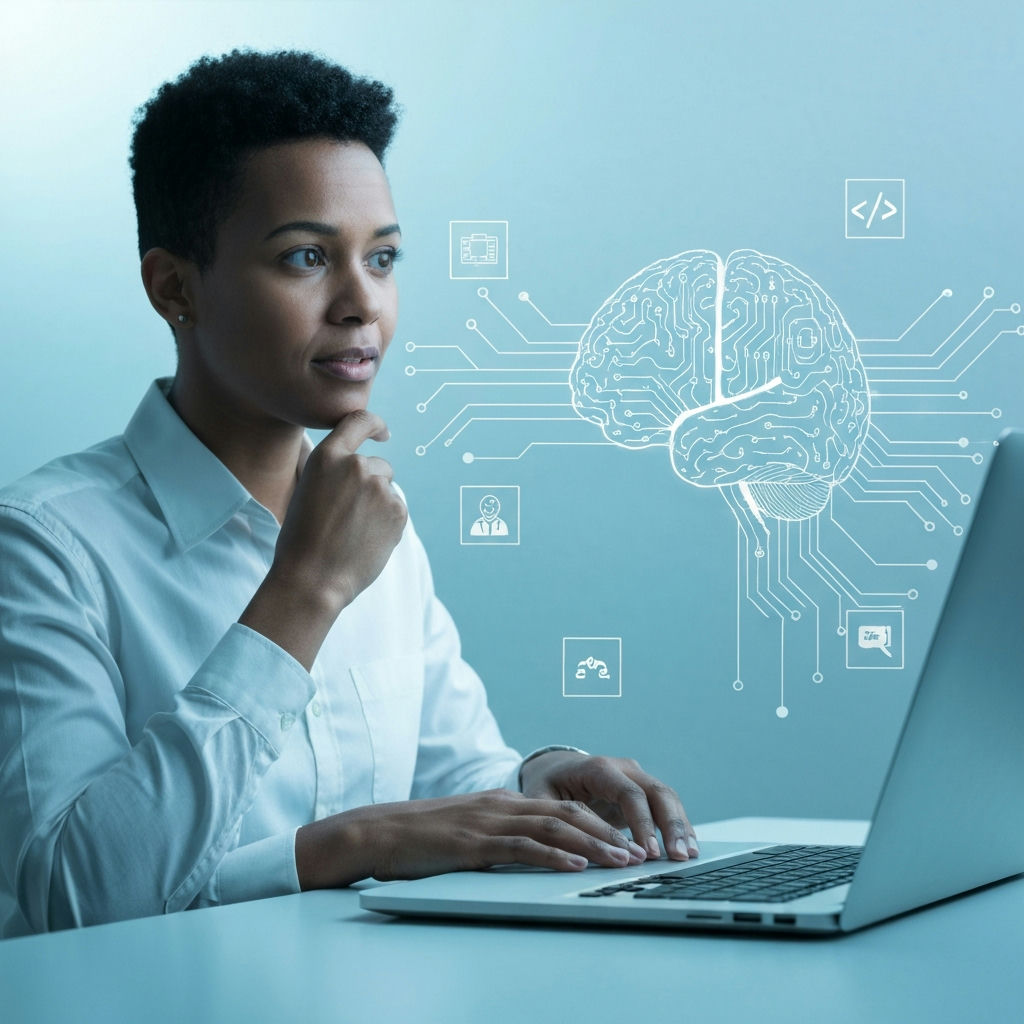
The rapid advancement of Artificial Intelligence (AI) is sparking widespread debate, particularly concerning its impact on the job market. For the Information Technology (IT) sector, a field inherently intertwined with technological progress, this conversation is especially pertinent. Will AI-powered automation truly render IT support teams, software developers, and system administrators obsolete by 2026? While the prospect of widespread job displacement is a common fear, a more nuanced understanding reveals a complex interplay of automation, augmentation, and the emergence of new roles within IT. This article delves into the transformative power of AI in IT, exploring how automation is reshaping existing job functions and creating new opportunities, rather than simply replacing human professionals.
The Evolving Landscape of IT Roles
Historically, the IT industry has been characterized by continuous evolution. From the advent of personal computers to the rise of cloud computing and the Internet of Things (IoT), new technologies have consistently redefined job descriptions and required new skill sets. AI represents the next significant wave of this transformation. Instead of viewing AI as a direct replacement, it’s more accurate to consider it a powerful tool that can automate repetitive tasks, enhance efficiency, and augment human capabilities.
Consider the sheer volume of data and the complexity of systems that IT professionals manage in 2026. AI excels at processing vast datasets, identifying patterns, and performing routine tasks with speed and accuracy that far surpass human limitations. This capability is already being leveraged across various IT functions.
AI in IT Support: Beyond Basic Troubleshooting
IT support is often the first area to be impacted by automation due to its high volume of repetitive queries. AI-powered chatbots and virtual assistants are becoming increasingly sophisticated, capable of handling a significant portion of Tier 1 support requests. These systems can:
- Automate ticket categorization and routing: AI can analyze incoming support tickets, understand the nature of the problem, and automatically assign them to the appropriate specialist, reducing manual triage time.
- Provide instant answers to common questions: Knowledge bases powered by AI can deliver accurate and context-aware responses to frequently asked questions, empowering users to self-serve and resolving issues faster.
- Perform initial diagnostics: AI tools can guide users through basic troubleshooting steps, collect diagnostic information, and even implement simple fixes, freeing up human agents for more complex issues.
- Predict potential issues: By analyzing system logs and user behavior, AI can proactively identify potential problems before they impact users, enabling preventative maintenance.
This doesn’t mean human IT support professionals are disappearing. Instead, their roles are shifting. As AI handles the routine, human agents can focus on:
- Complex problem-solving: Dealing with intricate, multi-faceted issues that require critical thinking, creativity, and human empathy.
- Customer relationship management: Building rapport, understanding user frustration, and providing a high-touch, personalized experience for critical issues.
- Escalation and advanced troubleshooting: Stepping in when AI reaches its limits, requiring deeper technical knowledge and the ability to think outside the box.
- AI system management and training: Overseeing the AI support tools themselves, ensuring they are functioning correctly, and providing feedback for continuous improvement.
A recent study by Gartner in 2026 suggests that while AI will automate a substantial percentage of common IT support tasks, the demand for skilled IT support professionals who can handle complex escalations and manage AI systems will remain robust. The focus shifts from reactive problem-solving to proactive system management and advanced human interaction.
AI’s Impact on Software Development: Augmenting Creativity
The role of a software developer is fundamentally about problem-solving, creativity, and logic. AI is not yet capable of replicating the human ingenuity required to design novel software architectures or conceptualize entirely new applications from scratch. However, AI is proving to be an invaluable assistant for developers, accelerating various stages of the software development lifecycle (SDLC).
AI tools can assist developers in numerous ways:
- Code generation and completion: AI-powered coding assistants, like GitHub Copilot and similar platforms, can suggest code snippets, complete lines of code, and even generate entire functions based on natural language prompts or existing code patterns. This significantly speeds up the coding process and reduces the likelihood of syntax errors.
- Automated testing and debugging: AI can analyze code for potential bugs, vulnerabilities, and performance bottlenecks. It can also automate the creation and execution of test cases, identifying issues much faster than manual testing.
- Code refactoring and optimization: AI can suggest ways to improve code efficiency, readability, and maintainability, helping developers write cleaner and more performant code.
- Natural language programming: Advancements are being made in AI models that can translate natural language descriptions directly into code, potentially lowering the barrier to entry for some programming tasks.
- Requirements analysis: AI can assist in analyzing user stories and requirements, identifying ambiguities or potential conflicts early in the development process.
The integration of AI into development workflows means that developers will spend less time on mundane coding tasks and debugging, and more time on:
- Architectural design and innovation: Focusing on high-level system design, choosing appropriate technologies, and developing innovative solutions.
- Complex algorithm development: Crafting sophisticated algorithms that require deep understanding and creative problem-solving.
- AI model development and integration: Building and integrating AI models into applications, requiring specialized skills in machine learning and data science.
- Code review and validation: Ensuring the quality, security, and efficiency of AI-generated or AI-assisted code.
- Strategic problem definition: Translating business needs into technical specifications, a task that requires human understanding of context and nuance.
The future of software development, as seen in 2026, isn’t about AI writing all the code. It’s about developers leveraging AI to write better code, faster, and focusing their human intelligence on higher-value, creative, and strategic aspects of software engineering. This shift necessitates developers acquiring new skills, particularly in understanding and working with AI tools and potentially in areas like prompt engineering for code generation.
AI for System Administrators: Enhancing Efficiency and Security
System administrators are the guardians of IT infrastructure, responsible for maintaining, configuring, and operating complex systems. The sheer scale and interconnectedness of modern IT environments make manual management increasingly challenging. AI offers powerful solutions to enhance the efficiency, reliability, and security of these operations.
AI’s contributions to system administration include:
- Automated system monitoring and anomaly detection: AI can continuously monitor vast amounts of system logs and performance metrics, identifying deviations from normal behavior that might indicate an impending failure or a security breach. This proactive approach is crucial for maintaining uptime.
- Predictive maintenance: By analyzing historical data, AI can predict when hardware components are likely to fail, allowing administrators to schedule replacements before critical systems go down.
- Automated patching and configuration management: AI can assist in deploying updates and patches across large server farms, ensuring systems are secure and up-to-date with minimal manual intervention. It can also help in maintaining consistent configurations across diverse environments.
- Enhanced cybersecurity: AI is a critical tool in modern cybersecurity. It can detect and respond to threats in real-time, analyze malware, identify suspicious network traffic, and automate incident response, significantly bolstering an organization’s security posture. For instance, AI-driven Security Information and Event Management (SIEM) systems are becoming standard.
- Resource optimization: AI can analyze usage patterns and predict future resource needs, helping administrators optimize cloud spending and ensure sufficient capacity for applications.
- Automated routine tasks: Many routine administrative tasks, such as user account management, log analysis, and backup verification, can be automated by AI-powered scripts and tools.
Similar to support and development, AI is augmenting, not replacing, system administrators. Their roles are evolving to encompass:
- AI system oversight and management: Configuring, training, and managing the AI tools used for monitoring, security, and automation.
- Advanced troubleshooting and root cause analysis: Investigating complex system failures or security incidents that AI cannot fully resolve.
- Strategic infrastructure planning: Designing and implementing robust, scalable, and secure IT infrastructure, leveraging AI insights.
- Cybersecurity expertise: Focusing on threat intelligence, advanced security strategy, and responding to sophisticated cyberattacks.
- Cloud architecture and optimization: Managing and optimizing complex cloud environments, often with AI assistance.
The skills required for system administrators in 2026 are shifting towards a deeper understanding of cloud technologies, cybersecurity, data analysis, and the ability to work effectively with AI-driven management platforms. The core responsibility of ensuring IT operational integrity remains, but the tools and methods are being revolutionized by AI.
The Rise of New IT Roles Driven by AI
The narrative of AI solely leading to job losses overlooks the fact that technological advancements also create entirely new job categories. The IT sector is already witnessing the emergence of roles directly related to the development, implementation, and management of AI.
AI Specialists and Machine Learning Engineers
These professionals are at the forefront of building and deploying AI models. Their responsibilities include:
- Developing AI algorithms: Designing and implementing machine learning models for various applications.
- Data science and analysis: Preparing, cleaning, and analyzing data to train AI models.
- Model training and optimization: Fine-tuning AI models for specific tasks and ensuring their performance.
- AI ethics and bias mitigation: Ensuring AI systems are fair, unbiased, and ethically deployed.
Prompt Engineers
As AI models become more sophisticated, the ability to communicate effectively with them becomes a valuable skill. Prompt engineers specialize in crafting precise and effective prompts to elicit desired outputs from AI systems, whether for content generation, code writing, or data analysis. This role requires a deep understanding of how AI models interpret language and context.
AI Ethicists and Governance Specialists
As AI becomes more integrated into business operations, ensuring its ethical and responsible use is paramount. These roles focus on developing guidelines, policies, and frameworks for AI deployment, addressing issues like data privacy, algorithmic bias, and accountability. This aligns with growing global regulations around AI, such as those being developed by the European Union’s AI Act.
AI Integration Specialists
These professionals bridge the gap between AI capabilities and business needs. They work to integrate AI solutions into existing IT infrastructure and business processes, ensuring seamless adoption and maximizing the value derived from AI investments.
The Importance of Upskilling and Reskilling
The key takeaway for IT professionals in 2026 is the critical need for continuous learning. The skills that were in high demand a few years ago may not be sufficient for the evolving IT landscape. AI is not a static technology; it’s a dynamic force that requires adaptation.
- Embrace AI Tools: IT professionals should actively seek to understand and utilize AI-powered tools relevant to their roles. This includes experimenting with AI coding assistants, exploring AI-driven monitoring solutions, and learning to interact with AI chatbots.
- Focus on Soft Skills: As AI automates routine tasks, uniquely human skills become even more valuable. Critical thinking, creativity, complex problem-solving, communication, collaboration, and emotional intelligence are crucial differentiators.
- Develop Data Literacy: Understanding data, how it’s collected, analyzed, and used to train AI models, is becoming a fundamental skill across many IT roles.
- Specialize in AI-Related Fields: For those looking to pivot, specializing in areas like machine learning, data science, AI ethics, or cybersecurity offers strong career prospects.
- Continuous Learning Platforms: Resources like online courses (Coursera, edX), professional certifications, and industry conferences provide excellent avenues for upskilling and reskilling. Organizations like CompTIA are increasingly incorporating AI-related skills into their certifications.
The World Economic Forum’s “Future of Jobs Report 2023” highlights analytical thinking, creative thinking, and technological literacy as key skills for the coming years, underscoring the blend of human ingenuity and tech proficiency needed.
Addressing the Fear of Job Displacement
The fear that AI will lead to mass unemployment in IT is understandable but likely overstated. History shows that technological revolutions tend to transform jobs rather than eliminate them entirely. While some roles focused on highly repetitive, automatable tasks may diminish, the overall demand for IT expertise is expected to grow, albeit with a shift in required skills.
AI is a tool, and like any powerful tool, its impact depends on how it’s wielded. Organizations that strategically implement AI will likely see increased productivity, innovation, and competitiveness. This, in turn, can lead to business growth and the creation of new opportunities.
Consider the analogy of the spreadsheet. When spreadsheets were introduced, accountants and bookkeepers didn’t disappear; their roles evolved. They moved from laborious manual calculations to more analytical tasks, interpreting data and providing strategic financial insights. AI is poised to have a similar, albeit more profound, effect on the IT industry.
Furthermore, the complexity of IT systems and the ever-present need for human oversight, security, and innovation mean that human professionals will remain indispensable. AI can automate tasks, but it cannot (yet) replicate the nuanced judgment, ethical considerations, and creative leaps that define human expertise.
The Future is Collaborative: Human-AI Synergy
The most probable future for AI and IT jobs in 2026 is one of collaboration and synergy. AI will handle the heavy lifting of data processing, routine tasks, and pattern recognition, while human IT professionals will focus on higher-level strategic thinking, complex problem-solving, creativity, and managing the human elements of technology.
- IT Support: Human agents will focus on empathetic customer service for complex issues and managing AI support systems.
- Developers: Will leverage AI for faster coding and debugging, dedicating more time to architectural innovation and complex algorithm design.
- Administrators: Will use AI for proactive monitoring and automation, concentrating on strategic infrastructure planning and advanced cybersecurity.
This human-AI collaboration will lead to more efficient, secure, and innovative IT operations. It requires a proactive approach from IT professionals to adapt their skill sets and embrace AI as a partner rather than a competitor.
Conclusion: Adapting to an AI-Augmented IT World
In 2026, the question is not if AI will impact IT jobs, but how. Automation driven by AI is undeniably reshaping the IT landscape, automating many routine tasks within support, development, and administration. However, this transformation is not a harbinger of mass unemployment. Instead, it signifies an evolution of roles, demanding new skills and fostering a collaborative environment where humans and AI work together.
The IT professionals who thrive in this new era will be those who embrace continuous learning, cultivate uniquely human skills like critical thinking and creativity, and skillfully leverage AI as a powerful tool to augment their capabilities. New roles are emerging, and the demand for IT expertise, particularly in specialized and strategic areas, is likely to persist and even grow. By understanding the nuances of AI’s impact and proactively adapting, IT professionals can navigate this exciting technological shift and build fulfilling, in-demand careers in an AI-augmented world. The future of IT jobs is not about replacement, but about augmentation and evolution.
Frequently Asked Questions
What are the primary ways AI is automating IT support tasks?
AI is automating IT support by handling routine inquiries through chatbots and virtual assistants, automatically categorizing and routing support tickets, performing initial diagnostics, and providing instant answers to common questions via intelligent knowledge bases. This allows human support staff to focus on more complex issues.
Will AI replace software developers entirely?
No, AI is unlikely to replace software developers entirely. Instead, AI tools are augmenting their capabilities by automating code generation, debugging, and testing. This frees up developers to concentrate on higher-level tasks such as architectural design, innovation, and complex problem-solving.
How is AI changing the role of system administrators?
AI is enhancing the efficiency and security of system administration through automated monitoring, predictive maintenance, automated patching, and advanced cybersecurity threat detection. System administrators are shifting towards managing AI systems, strategic infrastructure planning, and handling complex troubleshooting that AI cannot resolve.
What new IT job roles are emerging due to AI?
New roles are emerging such as AI Specialists, Machine Learning Engineers, Prompt Engineers (who craft instructions for AI), and AI Ethicists/Governance Specialists, who ensure responsible AI deployment. AI Integration Specialists are also in demand to implement AI solutions within organizations.
Is it necessary for IT professionals to learn AI skills?
Yes, it is highly beneficial, and increasingly necessary, for IT professionals to develop AI-related skills. This includes understanding and using AI tools relevant to their roles, developing data literacy, and potentially specializing in areas like machine learning or AI ethics to remain competitive and adaptable in the evolving IT job market.
How can IT professionals prepare for the impact of AI on their careers?
IT professionals can prepare by embracing continuous learning, upskilling and reskilling in areas like AI tools, data analysis, and cybersecurity. Focusing on developing uniquely human soft skills such as critical thinking, creativity, and complex problem-solving is also crucial. Exploring new AI-centric roles and certifications can further enhance career resilience.
—
*”All content published on this website is provided for general informational purposes only. The material may include technical guidance, troubleshooting advice, and general commentary relating to technology, software, security, and IT systems.
While every effort is made to ensure the information is accurate and up to date at the time of publication, Fox Technologies makes no representations or warranties of any kind, express or implied, regarding the completeness, reliability, suitability, or availability of the information contained on this website.
Technical procedures, commands, and configuration guidance are provided as examples only and may not be appropriate for every system or environment. Any reliance placed on the information provided is strictly at the user’s own risk.
Fox Technologies shall not be liable for any loss or damage including, without limitation, indirect or consequential loss, data loss, system failure, security issues, or business interruption arising from the use of this website or the implementation of any advice, guidance, or procedures described within its content.
Users are strongly advised to ensure appropriate backups are in place and to consult qualified professionals before making changes to systems, networks, software, or security configurations.”*