
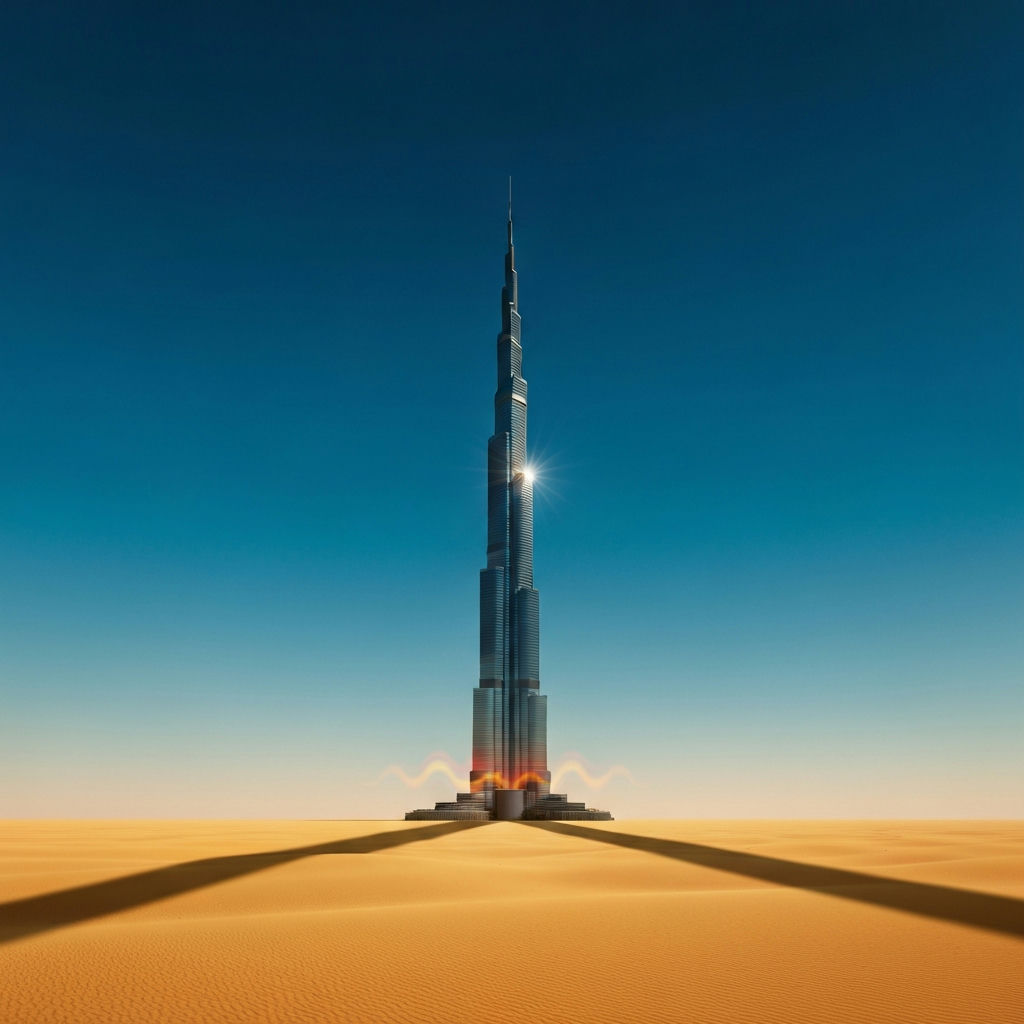
Dubai, a city synonymous with architectural marvels, stands as a testament to human ingenuity, pushing the boundaries of what’s possible in the harshest environments. At its heart, piercing the seemingly endless blue sky, is the Burj Khalifa, a structure that not only defines the skyline but also defies the extreme desert heat. In 2026, as temperatures consistently soar, understanding how this iconic skyscraper manages its internal climate is more crucial than ever. The Burj Khalifa, a beacon of innovation, employs a sophisticated system of engineering and design to not just survive, but thrive, in temperatures that would cripple lesser structures, often exceeding a scorching 50°C (122°F) during the peak summer months. This colossal edifice, standing at an astonishing 828 meters (2,717 feet), is more than just a building; it’s a climate-controlled ecosystem engineered to overcome the relentless challenge of the Arabian desert’s intense solar radiation and ambient heat.
A Symphony of Engineering: Defying the Desert’s Fury
The design and construction of the Burj Khalifa were not merely about achieving record-breaking height; they were intrinsically linked to solving the complex problem of heat management in one of the world’s most arid and hot regions. The engineers and architects faced a formidable adversary: the desert itself, with its scorching sun, sandstorms, and extreme temperature fluctuations. Their triumph lies in a multi-faceted approach that integrates cutting-edge technology, smart design principles, and a deep understanding of thermodynamics. This article delves into the ingenious strategies that allow the Burj Khalifa to remain a cool sanctuary amidst the inferno, exploring everything from its aerodynamic shape to its advanced cooling systems and material science innovations. We will uncover the secrets behind its ability to maintain a comfortable interior environment for its residents and visitors, even when the mercury outside climbs to unbearable levels.
Table of Contents
- The Unforgiving Desert Climate: Dubai’s Thermometric Challenge
- Aerodynamic Design: A Shape That Bends the Wind
- The Cool Core: Advanced Air Conditioning Systems
- Chilled Water Systems
- Condensate Water Recovery
- Material Science Marvels: Reflecting the Sun’s Might
- High-Performance Glazing
- Specialized Facade Coatings
- Shading Strategies: Blocking the Solar Assault
- The Building’s Own Shadow
- Internal and External Shading Devices
- Wind Engineering: Harnessing Nature’s Airflow
- Water Management: A Precious Resource in the Heat
- The Power Behind the Cool: Energy Consumption and Sustainability
- Beyond Cooling: Other Heat-Related Challenges
- Thermal Expansion
- Sandstorms
- A Case Study in Extreme Climate Resilience
- The Future of Supertall Buildings in Hot Climates
- Conclusion: A Triumph of Human Ingenuity
- Frequently Asked Questions (FAQs)
The Unforgiving Desert Climate: Dubai’s Thermometric Challenge
Dubai’s climate is characterized by extreme heat and humidity, particularly during the summer months. Average high temperatures in July and August often hover around 45°C (113°F), with peak temperatures frequently exceeding 50°C (122°F). The humidity levels can also be punishingly high, making the “feels like” temperature even more oppressive. Furthermore, the desert environment is prone to sandstorms, which can impact air quality and place stress on building exteriors. The sheer intensity of solar radiation is another significant factor. The sun beats down relentlessly, absorbing heat into building materials and driving up internal temperatures. For a structure as massive and tall as the Burj Khalifa, managing this thermal load is a monumental task. It requires a comprehensive strategy that addresses every facet of heat transfer and environmental control. The building must not only withstand the external heat but also maintain a stable, comfortable internal environment for thousands of occupants without exorbitant energy costs. This is a challenge that modern architectural and engineering principles are designed to meet, but the Burj Khalifa takes these solutions to an unprecedented scale.
Aerodynamic Design: A Shape That Bends the Wind
One of the most visually striking features of the Burj Khalifa is its spiraling, stepped design. This is not merely an aesthetic choice; it’s a crucial element of its wind engineering and thermal management strategy. The building’s unique shape is designed to confuse and disorient the wind, reducing the vortex shedding that can cause wind to buffet tall structures. By breaking up the wind flow, the tower minimizes the lateral forces exerted upon it. This aerodynamic advantage also plays a role in heat management.
The stepped design creates a series of microclimates around the building’s exterior. As wind moves around the tower, it can create pockets of lower pressure and turbulence. The stepped profile helps to dissipate these forces, preventing the wind from creating a consistent, high-pressure zone on one side and a low-pressure zone on the other, which can exacerbate heat gain. Moreover, the tapered form reduces the overall surface area exposed to direct sunlight at any given time, particularly as the sun moves across the sky. The building’s shape ensures that as the sun’s angle changes throughout the day and across seasons, different faces receive varying amounts of direct solar exposure, preventing any single facade from overheating excessively. This intelligent form-follows-function design is a foundational element in mitigating the desert’s thermal onslaught.
The Cool Core: Advanced Air Conditioning Systems
The heart of the Burj Khalifa’s climate control lies in its incredibly sophisticated air conditioning system. Cooling such a colossal structure in extreme heat requires an enormous capacity, and the engineers have devised a system that is both powerful and remarkably efficient. The system is designed to deliver conditioned air to every floor, ensuring a consistent and comfortable temperature throughout the year.
Chilled Water Systems
The primary cooling mechanism for the Burj Khalifa is a massive chilled water system. This system works by circulating chilled water throughout the building, which then absorbs heat from the interior air. The water is cooled in large chillers located at the base of the building. These chillers use a process similar to that found in a domestic refrigerator, but on an industrial scale. The chilled water is then pumped up through insulated pipes to air handling units (AHUs) located on each floor. These AHUs blow the building’s interior air over coils filled with the chilled water, effectively cooling the air before it is distributed throughout the interior spaces. The capacity of this system is immense, capable of cooling the equivalent of 10,000 domestic air conditioning units.
Condensate Water Recovery
A brilliant and sustainable aspect of the Burj Khalifa’s cooling system is its management of condensate water. As the air conditioning systems cool the air, moisture condenses on the cold coils. In many buildings, this water is simply drained away. However, in the Burj Khalifa, this collected condensation is a valuable resource in the arid desert environment. The system captures this condensate water, which is then filtered and used for irrigation of the surrounding landscaping and the building’s internal green spaces. This not only conserves water – a critical issue in Dubai – but also adds a touch of green life to the urban landscape, further enhancing the microclimate around the tower’s base. This integration of water management with cooling is a hallmark of sustainable design in extreme climates.
Material Science Marvels: Reflecting the Sun’s Might
The choice of materials used in the Burj Khalifa’s construction is paramount to its ability to withstand and mitigate extreme heat. The building’s facade, in particular, is engineered to interact intelligently with the intense desert sun.
High-Performance Glazing
The Burj Khalifa features a vast expanse of glass. To combat the intense solar heat gain, the building utilizes high-performance, double-glazed, low-emissivity (low-E) glass. This specialized glass is designed to reflect a significant portion of the sun’s heat-producing infrared radiation while allowing visible light to pass through. The low-E coating acts as a barrier, preventing heat from entering the building during the day and retaining heat inside during cooler nights, although the latter is less of a concern in Dubai’s climate. This significantly reduces the load on the air conditioning system. The reflective quality of the glass also contributes to the building’s striking appearance, giving it a shimmering, mirrored effect that shifts with the changing light.
Specialized Facade Coatings
Beyond the glazing itself, the materials used in the facade construction are chosen for their thermal properties. The concrete structure, for instance, has been formulated to withstand the harsh desert conditions. The exterior finishes are also designed to reflect solar radiation. In some areas, specialized coatings are applied to further enhance reflectivity. These coatings are not just about aesthetics; they are functional elements that help to keep the building’s exterior temperature lower, thereby reducing the amount of heat that needs to be managed by the internal cooling systems. The combination of reflective glass and facade materials creates a protective shell that deflects the sun’s energy.
Shading Strategies: Blocking the Solar Assault
Effective shading is a critical component of any building designed for hot climates. The Burj Khalifa employs several ingenious shading strategies, both passive and active, to minimize direct solar exposure.
The Building’s Own Shadow
As mentioned earlier, the building’s unique, stepped, and tapering form is intrinsically designed to cast its own shadow. As the sun moves across the sky, different parts of the building are shaded by other sections of the tower. This self-shading effect is particularly pronounced during the hottest parts of the day, when the sun is highest in the sky. The stepped profile creates a series of overhangs at different levels, offering protection to the facades below. This passive shading mechanism is a clever way to leverage the building’s own architecture to reduce heat gain.
Internal and External Shading Devices
In addition to the building’s inherent self-shading, various internal and external shading devices are employed. Many of the windows are equipped with solar blinds and louvers. These can be adjusted by occupants or, in some cases, automated systems to control the amount of sunlight entering the interior spaces. Externally, the design incorporates elements that provide additional shading. For instance, the balconies on certain levels offer a degree of protection to the windows below. The building’s orientation and the specific design of its facade elements are all carefully considered to maximize shading opportunities and minimize direct solar penetration.
Wind Engineering: Harnessing Nature’s Airflow
While the primary concern is often keeping heat out, the wind’s interaction with the Burj Khalifa is a complex factor that engineers have meticulously studied and harnessed. As previously noted, the aerodynamic design mitigates damaging wind forces. However, wind also plays a role in natural ventilation and cooling, albeit in a controlled manner within the Burj Khalifa.
The building’s multiple setbacks and the shape of its spire are designed to “confuse” the wind, preventing it from creating a uniform pressure around the building. This reduces the wind’s ability to channel air into unintended spaces or create excessive structural stress. While the interior is largely climate-controlled, the design allows for controlled airflow in certain external areas, such as balconies and terraces, to provide a more comfortable experience when occupants are outdoors. The building’s structure itself acts as a guide for airflow, directing it in ways that are beneficial for both structural stability and thermal management. Understanding and manipulating these wind dynamics is a crucial aspect of the Burj Khalifa’s success in its challenging environment.
Water Management: A Precious Resource in the Heat
Water is exceptionally scarce in Dubai, making its conservation a top priority. The Burj Khalifa’s design incorporates innovative water management strategies, particularly in relation to its cooling systems. As discussed, the condensate recovery system is a prime example, turning a byproduct of cooling into a valuable resource for irrigation.
Beyond condensate, the building also features a highly efficient potable water system. However, the sheer scale of the building means that even with efficiency, water consumption is significant. The use of drought-resistant native plants in the landscaping around the tower minimizes irrigation needs. The integration of water conservation into the building’s core systems, such as the condensate recovery, demonstrates a holistic approach to sustainability that is essential for any megaproject in an arid region. This focus on water efficiency is a critical lesson for future developments in similar climates.
The Power Behind the Cool: Energy Consumption and Sustainability
Operating a cooling system of the Burj Khalifa’s magnitude in Dubai’s extreme heat is an energy-intensive undertaking. While the building employs numerous strategies to minimize energy consumption, the sheer demand for cooling requires substantial power. The building is connected to Dubai’s electricity grid, which is increasingly powered by natural gas and, notably, a growing share of renewable energy sources, including solar power.
The developers and operators are committed to sustainability, and ongoing efforts are made to optimize energy efficiency. This includes regular maintenance of the cooling systems, smart building management systems that adjust cooling based on occupancy and external conditions, and the use of energy-efficient lighting and appliances. The building’s design, with its emphasis on natural light and passive cooling elements, contributes to reducing the overall energy footprint. However, the reality of maintaining comfort in such extreme conditions means that energy consumption remains a significant consideration. The integration of renewable energy sources into the grid powering the Burj Khalifa is a crucial step towards mitigating its environmental impact.
Beyond Cooling: Other Heat-Related Challenges
While cooling is the most prominent challenge, the extreme desert heat presents other engineering hurdles for the Burj Khalifa.
Thermal Expansion
Materials expand when they get hot and contract when they cool down. The vast temperature differences experienced in Dubai, from the scorching daytime heat to cooler nights and the more moderate winter months, mean that the Burj Khalifa’s structure undergoes significant thermal expansion and contraction. The building’s design incorporates expansion joints and a flexible structural system to accommodate these movements without causing stress or damage. The foundation, which extends deep into the ground, helps to anchor the building and manage these forces. The concrete and steel used in construction are specifically chosen for their ability to withstand these thermal cycles. This is a critical consideration in the design of any very tall building in an environment with significant temperature fluctuations.
Sandstorms
Dubai is susceptible to sandstorms, which can occur several times a year. These events pose several challenges for a supertall building like the Burj Khalifa. Firstly, the abrasive nature of sand can wear down exterior materials over time. The high-performance glazing and facade coatings are designed to resist this abrasion. Secondly, sandstorms can significantly reduce visibility and impact air quality. The building’s HVAC system is equipped with advanced filtration systems to ensure that the air inside remains clean and healthy, even when the outside air is laden with dust and sand. The building’s structural integrity is also designed to withstand the increased wind loads that often accompany sandstorms.
A Case Study in Extreme Climate Resilience
The Burj Khalifa stands as a remarkable case study in how modern engineering and architectural design can overcome the most challenging environmental conditions. Its success in maintaining a comfortable internal climate while being exposed to extreme heat, intense solar radiation, and occasional sandstorms is a testament to meticulous planning and innovative problem-solving.
The integrated approach, combining aerodynamic design, advanced cooling systems, specialized materials, and passive shading, provides a blueprint for future megaprojects in hot and arid regions. The building demonstrates that it is possible to construct ultra-tall structures that are not only iconic but also functional and resilient in the face of environmental adversity. The lessons learned from the Burj Khalifa’s design and operation are invaluable for architects and engineers worldwide facing similar climatic challenges. Its ability to provide a habitable and luxurious environment in a region known for its extreme temperatures is a significant achievement. For more on the principles of resilient architecture, resources from organizations like the World Green Building Council offer valuable insights.
The Future of Supertall Buildings in Hot Climates
As global temperatures continue to rise and urbanization accelerates, the development of supertall buildings in hot climates will likely increase. The Burj Khalifa’s success provides a strong foundation for future endeavors. Emerging technologies in smart materials, advanced climate control systems, and integrated renewable energy solutions will play an even greater role. For instance, advancements in facade technology, such as dynamic glazing that can change its tint in response to sunlight, or the use of phase-change materials to absorb and release heat, could further enhance efficiency.
The concept of “passive design” – minimizing energy consumption through smart architectural choices – will become even more critical. This includes optimizing building orientation, maximizing natural ventilation where appropriate, and utilizing green roofs and walls for insulation and cooling. The principles of water conservation, so elegantly demonstrated by the Burj Khalifa’s condensate recovery system, will also be paramount. The future of supertall buildings in hot climates lies in a harmonious integration of technology, innovative design, and a deep respect for the environment. As detailed by the Council on Tall Buildings and Urban Habitat, research into sustainable tall building design is ongoing and crucial for urban development.
Conclusion: A Triumph of Human Ingenuity
The Burj Khalifa is far more than just the world’s tallest building; it is a triumph of human ingenuity and engineering prowess, particularly in its ability to master the extreme desert heat of Dubai. From its wind-defying aerodynamic shape to its powerful yet efficient chilled water system, its reflective facade materials, and its clever water conservation strategies, every aspect of the tower’s design has been meticulously crafted to ensure resilience and comfort in one of the planet’s most challenging climates.
In 2026, as the world grapples with the effects of climate change, the Burj Khalifa serves as a powerful symbol of what can be achieved when innovation meets necessity. It demonstrates that even in the face of scorching temperatures and arid conditions, it is possible to create architectural marvels that not only stand tall but also thrive. The strategies employed by the Burj Khalifa offer invaluable lessons for sustainable development in hot regions worldwide, proving that even the harshest environments can be transformed into habitable and inspiring spaces through thoughtful design and cutting-edge technology. The tower truly drinks the desert, not by succumbing to its heat, but by intelligently managing and ultimately overcoming it.
Frequently Asked Questions (FAQs)
How hot does it get in Dubai where the Burj Khalifa is located?
Dubai experiences extreme heat, especially during the summer months. Average high temperatures in July and August frequently reach around 45°C (113°F), with peak temperatures often exceeding 50°C (122°F). Humidity levels can also be very high, making the perceived temperature even hotter.
What is the main cooling system used in the Burj Khalifa?
The primary cooling system is a large-scale chilled water system. This system circulates chilled water, cooled by chillers at the building’s base, to air handling units on each floor. These units then cool the interior air before distributing it throughout the building.
Does the Burj Khalifa use any recycled water?
Yes, the Burj Khalifa has an innovative system that recovers condensate water generated by the air conditioning units. This collected water is filtered and then used for irrigating the surrounding landscaping and internal green spaces, conserving a precious resource in the desert climate.
How does the building’s shape help with the heat?
The Burj Khalifa’s unique, spiraling, and stepped design is aerodynamic, which helps reduce wind forces. Crucially for heat management, this shape also creates self-shading as the sun moves across the sky, reducing the amount of direct solar radiation hitting the facade at any given time.
What kind of glass is used on the Burj Khalifa’s facade?
The building uses high-performance, double-glazed, low-emissivity (low-E) glass. This specialized glass reflects a significant portion of the sun’s heat-producing infrared radiation while allowing visible light to enter, thereby reducing heat gain inside the building.
Are there any challenges related to extreme heat beyond cooling?
Yes, extreme heat causes thermal expansion in building materials. The Burj Khalifa’s structure is designed with expansion joints and flexibility to accommodate the significant expansion and contraction of materials due to temperature fluctuations. Sandstorms are another challenge, requiring advanced air filtration and abrasion-resistant facade materials.
—
*”All content published on this website is provided for general informational purposes only. The material may include technical guidance, troubleshooting advice, and general commentary relating to technology, software, security, and IT systems.
While every effort is made to ensure the information is accurate and up to date at the time of publication, Fox Technologies makes no representations or warranties of any kind, express or implied, regarding the completeness, reliability, suitability, or availability of the information contained on this website.
Technical procedures, commands, and configuration guidance are provided as examples only and may not be appropriate for every system or environment. Any reliance placed on the information provided is strictly at the user’s own risk.
Fox Technologies shall not be liable for any loss or damage including, without limitation, indirect or consequential loss, data loss, system failure, security issues, or business interruption arising from the use of this website or the implementation of any advice, guidance, or procedures described within its content.
Users are strongly advised to ensure appropriate backups are in place and to consult qualified professionals before making changes to systems, networks, software, or security configurations.”*