
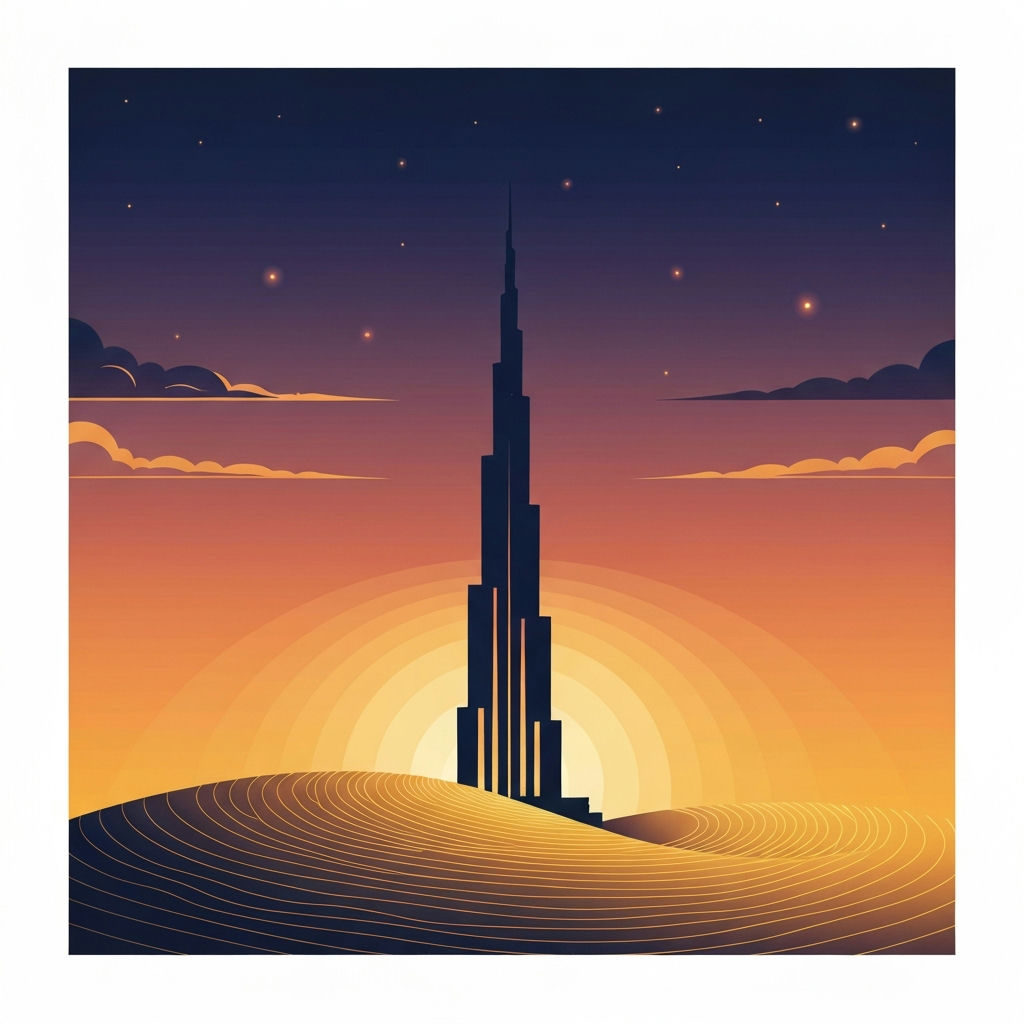
The Burj Khalifa, a breathtaking marvel of modern engineering and architectural ambition, stands as a testament to human ingenuity, piercing the sky at an astonishing height of 828 meters (2,717 feet). As of 2026, it continues to captivate the world, not just for its record-breaking stature but for the incredible journey from a visionary concept to a globally recognized icon. This isn’t just a story of steel and glass; it’s a narrative woven with groundbreaking innovation, meticulous planning, and the unwavering spirit to push the boundaries of what’s possible. Discover the untold secrets and fascinating details that propelled the Burj Khalifa from a blueprint in the desert sands to its undisputed status as a modern wonder.
The Genesis of a Giant: Dreaming Big in Dubai
The story of the Burj Khalifa begins in the early 2000s, a time when Dubai was already charting an ambitious course for its future. The vision was clear: to create a landmark that would not only redefine the city’s skyline but also put it on the global map as a hub of luxury, innovation, and tourism. This wasn’t merely about building tall; it was about constructing a symbol of progress and aspiration. The leadership envisioned a mixed-use development that would anchor a new urban district, attracting international attention and investment. This ambitious project, initially known as the Burj Dubai, was conceived as the centerpiece of the sprawling Downtown Dubai development. The goal was to create a destination that would draw visitors and residents alike, fostering economic growth and showcasing the emirate’s forward-thinking approach. The sheer scale of the undertaking was unprecedented, requiring a level of vision and confidence that few cities could match.
The Architects of Ambition: Skidmore, Owings & Merrill and Adrian Smith
The monumental task of designing such an iconic structure fell to the renowned American architectural firm Skidmore, Owings & Merrill (SOM). Leading the design team was Adrian Smith, a principal at SOM at the time, whose prolific career includes numerous skyscrapers that have shaped cityscapes worldwide. Smith’s design philosophy often emphasizes elegance, efficiency, and a deep respect for context. For the Burj Khalifa, he drew inspiration from Islamic architecture, particularly the geometric patterns found in traditional motifs and the desert flower, Hymenocallis. The triple-lobed footprint of the building is a direct nod to this floral inspiration, a design choice that is both aesthetically pleasing and structurally advantageous, helping to reduce wind loads on the towering structure. The design team’s challenge was immense: to create a building that was not only the tallest in the world but also stable, functional, and visually striking. They had to consider everything from the structural integrity against extreme wind forces to the environmental impact and the creation of a comfortable internal climate in a scorching desert environment.
Engineering the Impossible: A Symphony of Innovation
Building the Burj Khalifa required pushing the limits of engineering and construction technology. The structural system, a “buttressed core” design, is a key innovation that allows the building to support its immense height. This system features a hexagonal core at the center, with three buttresses extending outwards, forming a Y-shape. This configuration provides exceptional resistance to lateral forces like wind and seismic activity. The foundation alone is a marvel, consisting of over 192 bored piles extending more than 50 meters (164 feet) deep into the ground, anchored in bedrock. This robust foundation system was crucial to support the colossal weight of the skyscraper. The construction process itself was a feat of logistical prowess, involving thousands of workers and a constant supply of materials. The concrete for the Burj Khalifa was pumped to unprecedented heights, a challenge that required specialized equipment and meticulous planning. The sheer volume of concrete used is staggering, enough to fill a line of trucks stretching over 2,000 kilometers (1,240 miles).
The Challenge of Wind: A Constant Adversary
Wind is perhaps the most significant natural force that any supertall skyscraper must contend with. At the heights the Burj Khalifa reaches, wind speeds can be extreme and unpredictable. The design team employed advanced wind tunnel testing and computational fluid dynamics to understand how wind would interact with the building. The result was a tapering design with setbacks at different levels, which helps to “confuse” the wind. By staggering the building’s profile, the wind is prevented from forming a consistent vortex around the structure, thereby reducing the sway and ensuring occupant comfort. This innovative design approach was critical to achieving the building’s record-breaking height while maintaining structural integrity and a stable environment for those inside. The building’s shape actively disrupts wind patterns, a testament to the sophisticated engineering involved.
Concrete Pumping Records: Reaching New Heights
The construction of the Burj Khalifa set new records for concrete pumping. The world’s highest concrete pumping occurred during the construction, with concrete being lifted to a height of 601 meters (1,972 feet). This was a critical achievement that enabled the completion of the upper levels of the tower. Specialized concrete mixes were developed to handle the extreme pressures and temperatures involved in this process. The logistics of transporting and mixing the vast quantities of concrete required were immense, involving a dedicated concrete batching plant and a fleet of trucks working around the clock. This achievement alone highlights the pioneering spirit behind the Burj Khalifa’s construction.
Construction: A Global Workforce and Unprecedented Scale
The construction of the Burj Khalifa was a massive undertaking, involving a global workforce of over 12,000 skilled workers and contractors from more than 100 countries. The sheer scale of the project demanded meticulous coordination and management. The main contractor, a joint venture between Samsung Engineering & Construction, Besix, and Arabtec, managed the complex construction process. The timeline was aggressive, with construction commencing in 2004. The building’s distinctive spire, a crucial element of its iconic silhouette, was one of the final components to be erected, requiring specialized crane technology to lift and install. The project’s success was a testament to international collaboration and the ability to mobilize resources on an unprecedented scale.
Beyond the Height: Features That Define the Burj Khalifa
While its height is its most defining characteristic, the Burj Khalifa is much more than just a tall building. It’s a meticulously designed environment that offers a unique living and working experience. The building is a vertical city within itself, housing residential apartments, corporate suites, a hotel managed by Armani, and observation decks that offer unparalleled views of Dubai and beyond.
The Armani Hotel Dubai: Luxury Redefined
The lower floors of the Burj Khalifa are home to the Armani Hotel Dubai, a collaboration between the iconic fashion designer Giorgio Armani and Emaar Properties. Located on floors 9 to 16, the hotel is a sanctuary of understated luxury, reflecting Armani’s signature minimalist aesthetic. Each element, from the custom furnishings to the ambient lighting, has been carefully curated to create an atmosphere of sophisticated comfort. The hotel offers a unique hospitality experience, blending world-class service with the grandeur of its iconic setting. Guests can enjoy exclusive dining options, a luxurious spa, and direct access to the Burj Khalifa’s many attractions.
Residential Living: Sky-High Apartments
The Burj Khalifa offers a range of luxurious residential apartments, from studios to multi-bedroom suites. These residences provide an unparalleled living experience, with breathtaking views, state-of-the-art amenities, and access to the building’s extensive facilities. Residents enjoy services such as 24-hour concierge, security, and maintenance, ensuring a seamless and comfortable lifestyle. The apartments are designed with high-quality finishes and intelligent home systems, offering a blend of modern convenience and sophisticated living. Living in the Burj Khalifa is an aspiration for many, offering a unique opportunity to inhabit one of the world’s most iconic structures.
Observation Decks: Views That Inspire Awe
The Burj Khalifa features two observation decks: “At the Top” on levels 124 and 125, and the exclusive “At the Top, Burj Khalifa SKY” on level 148. These decks offer visitors an unparalleled perspective of Dubai, stretching out to the horizon. On a clear day, the views can extend for up to 96 kilometers (60 miles). The observation decks are equipped with advanced telescopes and interactive displays that provide information about the landmarks visible from the tower and the history of Dubai. The experience of standing at such an immense height, looking down upon the cityscape, is truly unforgettable. These vantage points have become a must-visit destination for tourists and a source of pride for residents.
The Science of Sight: What You Can See
From the observation decks, visitors can see an incredible panorama. The city of Dubai unfolds below, with its intricate network of roads, architectural marvels, and the shimmering waters of the Arabian Gulf. Landmarks such as the Dubai Fountain, the Dubai Mall, and the Palm Jumeirah are clearly visible. On exceptionally clear days, it’s even possible to see the curvature of the Earth and distant coastlines. The experience is enhanced by multimedia presentations and informative panels that detail the sights and the history of the region. The sheer scale of the view underscores the ambitious development that has transformed Dubai into a global metropolis.
The Spire: A Crown Jewel
The spire of the Burj Khalifa is not merely an aesthetic element; it plays a crucial role in the building’s structural integrity and communication systems. Topped with a high-performance antenna, the spire extends the building’s height significantly, contributing to its iconic silhouette. The construction of the spire was one of the most complex phases of the project, requiring specialized engineering and crane technology. It is a symbol of the building’s ultimate reach, a beacon that can be seen from miles around. The spire also houses essential communication equipment, further integrating the building into the modern technological landscape.
Sustainability and Innovation: Building for the Future
In an era of increasing environmental awareness, the Burj Khalifa incorporates several sustainable design features. These innovations aim to reduce the building’s environmental footprint and enhance its efficiency. The building’s cooling system, for instance, utilizes a central water-cooled chiller system, which is more energy-efficient than conventional air-cooled systems. Condensate water collected from the cooling systems is channeled into a separate pipe network and used for irrigating the landscaping around the building. This initiative helps conserve precious water resources in the arid climate of Dubai.
Water Conservation: A Desert Necessity
Water is a scarce resource in desert environments, making water conservation a paramount concern for any large-scale project in Dubai. The Burj Khalifa employs a state-of-the-art water system that recycles greywater and treats wastewater for irrigation. The building’s landscaping features drought-resistant plants that require minimal watering. The condensate recovery system, mentioned earlier, is a key component of this strategy, collecting water vapor that condenses on the building’s exterior and interior cooling coils. This harvested water is then used to nourish the extensive gardens and green spaces surrounding the tower, contributing to a more sustainable urban environment.
Energy Efficiency: Smart Design Choices
Beyond water conservation, the Burj Khalifa incorporates several energy-efficient design elements. The building’s facade is clad with reflective glazing, which helps to reduce solar heat gain, thereby lowering cooling loads. The orientation of the building and the strategic placement of shading devices also contribute to minimizing heat absorption. Furthermore, the building is equipped with advanced building management systems that monitor and control energy consumption for lighting, heating, and cooling, ensuring optimal efficiency throughout the day. These measures, combined with the building’s sheer scale, contribute to a significant reduction in its overall energy footprint compared to a less intelligently designed structure of similar size.
The Burj Khalifa’s Impact: A Symbol of Dubai’s Ambition
The Burj Khalifa has had a profound impact on Dubai and the wider region, serving as a powerful symbol of the emirate’s ambition, economic diversification, and commitment to innovation. Its presence has significantly boosted tourism, attracting millions of visitors annually who come to marvel at its architecture and experience its attractions. The tower has become an indispensable part of Dubai’s global brand identity, instantly recognizable and associated with modernity, luxury, and achievement.
Tourism Catalyst: Drawing the World to Dubai
Since its opening in 2010, the Burj Khalifa has been a major draw for tourists. The observation decks alone attract thousands of visitors daily, contributing significantly to Dubai’s tourism revenue. The building’s iconic status has made it a must-see attraction, featured prominently in travel itineraries and promotional materials. Its presence has spurred the development of surrounding attractions, including the Dubai Mall and the Dubai Fountain, creating a vibrant tourist hub that draws visitors from all over the globe. The economic impact extends beyond direct tourism, supporting jobs in hospitality, retail, and transportation sectors. According to the Dubai Department of Economy and Tourism, visitor numbers continue to rise year after year, with the Burj Khalifa consistently ranking as a top attraction.
Economic Engine: Driving Development and Investment
The Burj Khalifa was conceived as a catalyst for economic growth, and its impact has been substantial. It anchored the development of Downtown Dubai, a master-planned community that has become one of the most sought-after addresses in the city. The tower has attracted significant foreign investment, both in its residential and commercial spaces, and has inspired further large-scale development projects across Dubai. Its success has reinforced Dubai’s reputation as a global business and investment hub, capable of undertaking and successfully completing projects of unprecedented scale and complexity. The visibility and prestige associated with the Burj Khalifa have made Dubai an attractive destination for multinational corporations and high-net-worth individuals.
A Global Icon: Inspiring Future Generations
The Burj Khalifa has transcended its physical form to become a global icon, representing human achievement and the relentless pursuit of excellence. It stands as a beacon of aspiration, demonstrating that with vision, determination, and innovation, even the most ambitious goals can be realized. Its influence can be seen in subsequent supertall skyscraper projects around the world, inspiring architects and engineers to push the boundaries of design and construction. The story of its rise from desert sand is a powerful narrative that continues to inspire wonder and admiration, a testament to what can be achieved when imagination meets engineering prowess. Its enduring appeal solidifies its place in the pantheon of architectural marvels.
The Future of the Burj Khalifa in 2026 and Beyond
As of 2026, the Burj Khalifa remains the undisputed king of skyscrapers, a symbol of Dubai’s dynamism and forward-looking vision. Its continued prominence underscores the success of its design, construction, and operational strategies. The building is more than just a tourist attraction; it’s a vibrant community, a luxury destination, and a symbol of progress that continues to inspire.
Ongoing Maintenance and Upkeep: Preserving a Marvel
Maintaining a structure of the Burj Khalifa’s scale and complexity is an ongoing, significant undertaking. Regular inspections, cleaning, and system checks are crucial to ensure its safety, functionality, and aesthetic appeal. Specialized teams are employed for tasks such as window cleaning, which requires extensive safety protocols and equipment due to the building’s height. The building’s advanced systems, including HVAC, elevators, and fire suppression, are continuously monitored and maintained by expert technicians. Emaar Properties, the developer, invests heavily in preserving the integrity and excellence of this global landmark. The dedication to meticulous upkeep ensures that the Burj Khalifa will continue to stand tall for generations to come.
Evolving Attractions and Experiences
The Burj Khalifa is not static; it evolves to offer new and enhanced experiences to its visitors and residents. In 2026, ongoing enhancements to the observation decks, interactive exhibits, and dining facilities ensure that the visitor experience remains fresh and captivating. The integration of augmented reality (AR) and virtual reality (VR) technologies in the visitor journey is a likely development, offering deeper insights into the building’s construction and the surrounding cityscape. Furthermore, special events and light shows projected onto the facade continue to draw crowds, making the Burj Khalifa a dynamic and ever-present spectacle. These continuous improvements ensure its relevance and appeal in a rapidly changing world.
A Lasting Legacy: Inspiring Tomorrow’s Icons
The legacy of the Burj Khalifa is already firmly established. It has proven that with bold vision and cutting-edge engineering, humanity can achieve extraordinary feats. It has reshaped the perception of what is possible in urban development and architectural design. As cities around the world continue to grow upwards, the lessons learned from the Burj Khalifa’s construction and operation will undoubtedly inform future projects. Its story serves as a powerful reminder of the transformative potential of human ambition, a narrative etched in steel and glass against the vast canvas of the desert sky. Its influence extends far beyond its physical dimensions, inspiring a generation of designers, engineers, and visionaries.
Frequently Asked Questions
What is the main inspiration behind the Burj Khalifa’s design?
The design of the Burj Khalifa draws inspiration from Islamic architecture, particularly the geometric patterns found in traditional motifs, and the desert flower, Hymenocallis. The triple-lobed footprint of the building is a direct nod to this floral inspiration, a design choice that is both aesthetically pleasing and structurally advantageous, helping to reduce wind loads.
How tall is the Burj Khalifa?
The Burj Khalifa stands at an impressive height of 828 meters (2,717 feet), making it the tallest building in the world. Its height is a significant factor in its global recognition and architectural significance.
Who designed the Burj Khalifa?
The architectural firm Skidmore, Owings & Merrill (SOM) designed the Burj Khalifa, with Adrian Smith leading the design team. Their innovative approach to skyscraper design was crucial for overcoming the engineering challenges associated with building the world’s tallest structure.
What are the main attractions within the Burj Khalifa?
The Burj Khalifa features several key attractions, including the observation decks “At the Top” (levels 124 and 125) and “At the Top, Burj Khalifa SKY” (level 148), offering panoramic views of Dubai. It also houses the luxurious Armani Hotel Dubai and premium residential apartments.
How does the Burj Khalifa manage strong winds?
The Burj Khalifa’s design incorporates a “buttressed core” structural system and a tapering profile with setbacks at various levels. This design helps to “confuse” the wind, preventing the formation of consistent vortices and significantly reducing the sway of the building, thereby ensuring stability and occupant comfort. This innovative approach is a key factor in its ability to reach such extreme heights.
What sustainability features does the Burj Khalifa incorporate?
The Burj Khalifa integrates several sustainable design features, including a highly efficient central water-cooled chiller system for cooling, a condensate recovery system that collects water for irrigation, and the use of reflective glazing on its facade to reduce solar heat gain. These measures help to minimize the building’s environmental impact in the arid desert climate. For more on sustainable building practices, you can explore resources from the U.S. Green Building Council.
Conclusion
The Burj Khalifa is more than just a skyscraper; it’s a symbol of human ambition, architectural innovation, and Dubai’s relentless drive towards the future. From its conceptualization as a desert dream to its realization as a global icon, its journey is a compelling narrative of overcoming challenges through groundbreaking engineering and visionary design. As of 2026, it continues to inspire awe, attract visitors from around the world, and stand as a proud testament to what can be achieved when we dare to dream bigger and build higher. Its story is etched not just in steel and glass, but in the spirit of human progress.
—
*”All content published on this website is provided for general informational purposes only. The material may include technical guidance, troubleshooting advice, and general commentary relating to technology, software, security, and IT systems.
While every effort is made to ensure the information is accurate and up to date at the time of publication, Fox Technologies makes no representations or warranties of any kind, express or implied, regarding the completeness, reliability, suitability, or availability of the information contained on this website.
Technical procedures, commands, and configuration guidance are provided as examples only and may not be appropriate for every system or environment. Any reliance placed on the information provided is strictly at the user’s own risk.
Fox Technologies shall not be liable for any loss or damage including, without limitation, indirect or consequential loss, data loss, system failure, security issues, or business interruption arising from the use of this website or the implementation of any advice, guidance, or procedures described within its content.
Users are strongly advised to ensure appropriate backups are in place and to consult qualified professionals before making changes to systems, networks, software, or security configurations.”*